Measures
The GeoSmoking Study collected data across multiple domains to understand the relationship between tobacco retail environments and smoking behavior.
Data Access & Documentation
🔒 Data Access
- De-identified datasets available for research
- Data use agreements required
- Secure data sharing protocols
- Collaborative analysis opportunities
📄 Documentation
- Complete variable codebook with descriptions
- Data collection protocols and procedures
- Quality control and validation methods
- Missing data patterns and handling
Data Overview
📊 Recruitment
We screened over 4,000 potential participants recruited with the help of BuildClinical
📍 Geospatial Data
GPS coordinates, retail environment mapping, and tobacco outlet exposure measures collected continuously throughout the 6-week study.
📱 EMA Data
Real-time ecological momentary assessments of craving, mood, and smoking behavior via smartphone app. Surveys were sent 4 times a day throughout the entire study period
Data Collection Timeline
2 Weeks
Initial Assessment -> 2 Week Data Collection Period
Demographics, smoking history, psychometric measures, location tracking setup
4 Weeks
3 Conditions: Control, Tobacco Store Visits, Non-Tobacco Store Visits
EMA surveys, GPS tracking, and image rating tasks throughout study period
Post-Intervention
Optional Neuro-imaging study with additional survey measures
Data Categories
📋 Demographics & Screening
Participant characteristics, eligibility criteria, and baseline smoking behavior collected during initial screening and enrollment.
Key Variables:
- Age, gender, race/ethnicity, education, income
- Smoking history and current patterns
- Geographic location and mobility
- COVID-19 vaccination status
📊 Psychometric Assessments
Validated survey instruments administered at multiple timepoints to assess smoking-related behaviors, cognitions, and individual differences.
Survey Measures
Instrument Categories:
- Smoking dependence and motivation
- Stress and coping measures
- Personality and individual differences
- Social and environmental factors
- Cessation intentions and self-efficacy
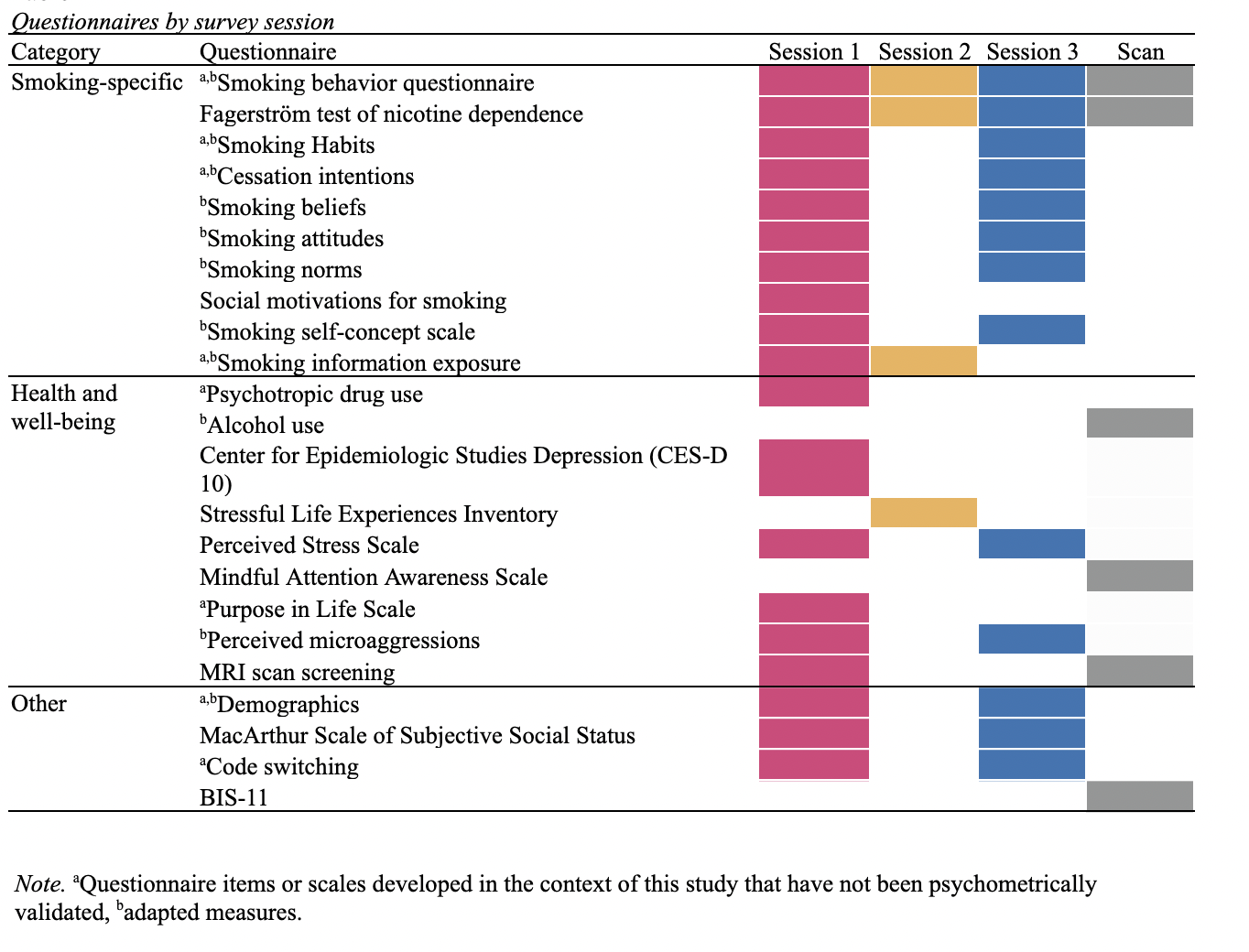
Survey measures were collected over Qualtrics during each Online Study Session and during the optional fMRI study session.
- Session 1 was completed 2 days before starting the Baseline period of the study
- Session 2 was meant to be completed within 1 week of completing the Baseline period, and two days before starting the Intervention period.
- Session 3 was completed after the Intervention period. Participants were meant to complete Session 3 within one week, but their data was not excluded if it was completed later.
- Participants were invited to schedule an option fMRI visit if they met the study criteria. Participants completed surveys before and after their scan.
Ecological Momentary Assessment (EMA) through LifeData
📱 What is EMA?
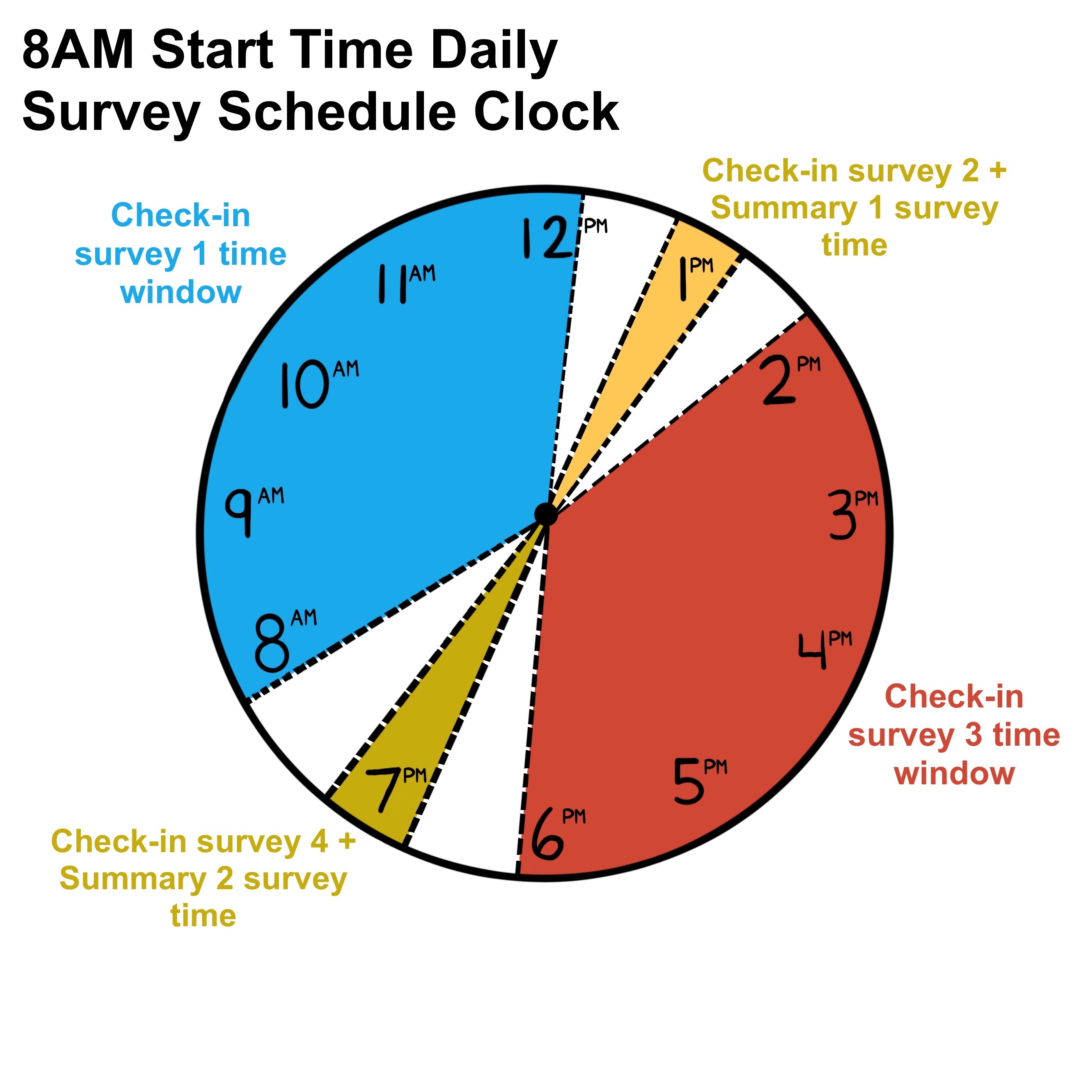
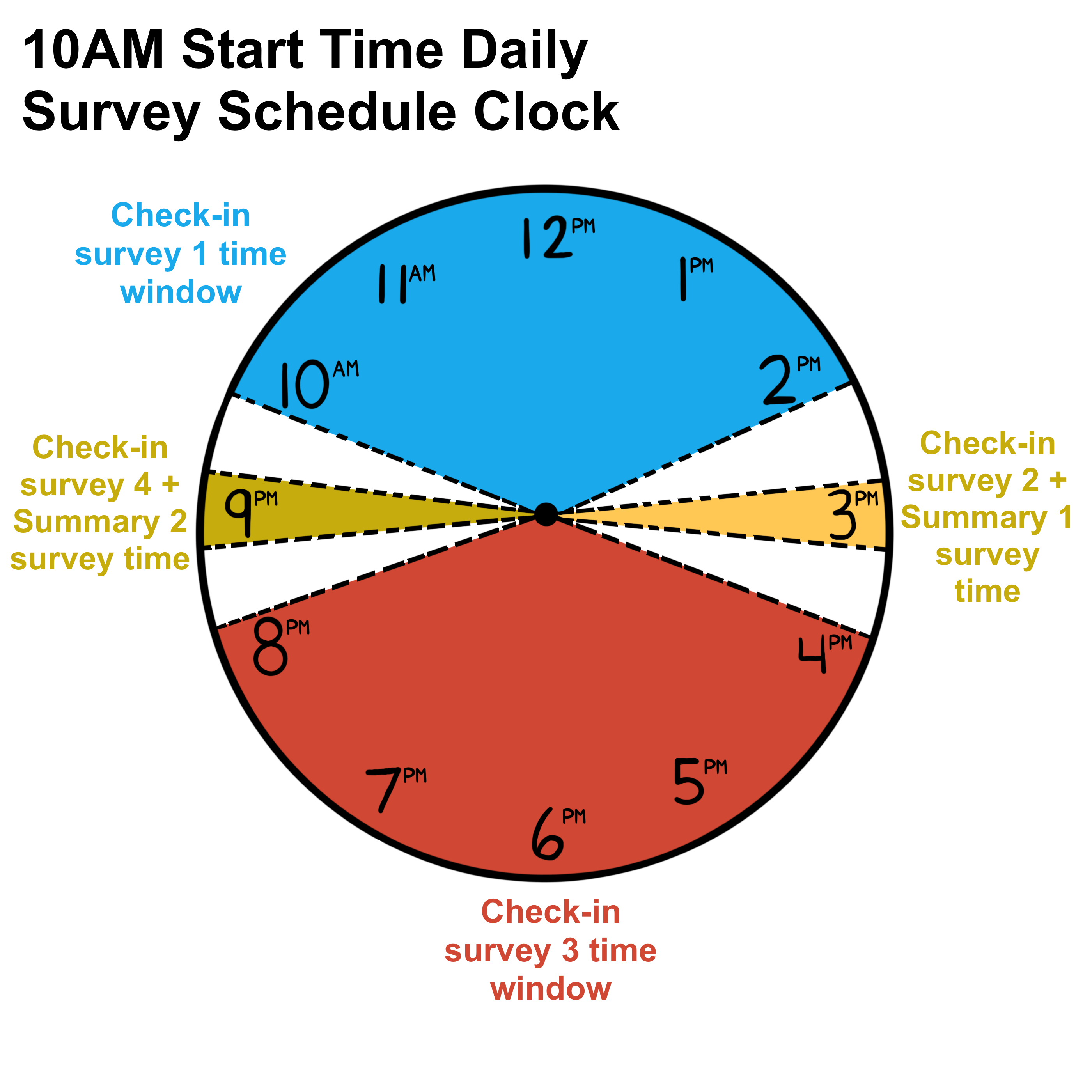
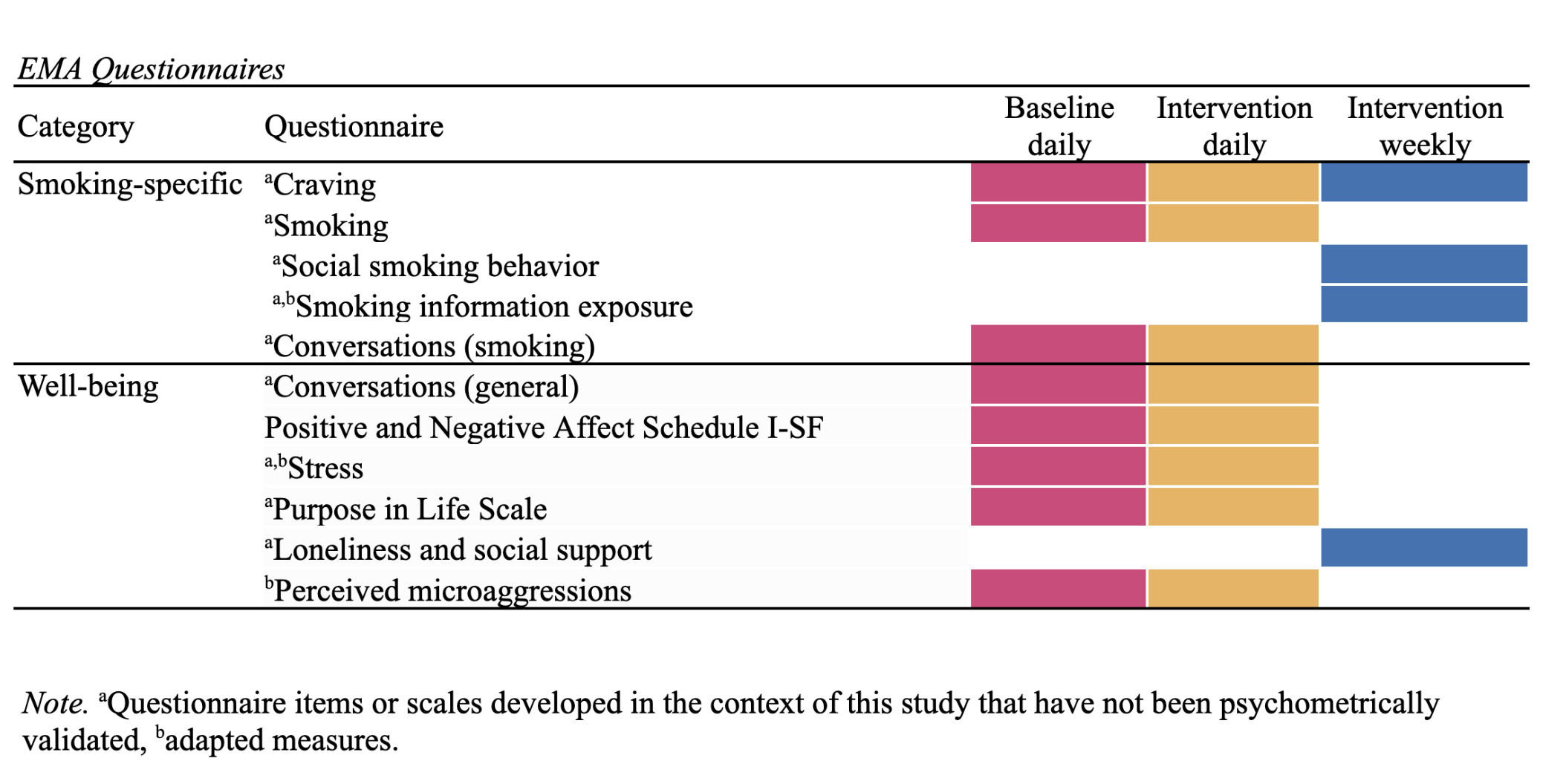
We used LifeData's Real Life Exp app to deliver surveys to participant phones throughout the day for the entire study. This let us gather real-time data on a person's immediate mood, cravings, and emotions as they went about their daily life.
Participants chose a start time that fit with their schedule and received surveys 4 times a day. In order to continue to the intervention phase of the study, participants needed to respond to at least 75% of surveys during the baseline phase.
Geolocation Data
📍 Participant Geolocation
Participants' location data was collected through Google Maps Timeline and Location History feature. Participants were given detailed instructions based on their phone type to set up their location tracking. Participants would then download their data through Google Takeout and upload their location history through a Qualtrics survey. If participants had any technical issues they could schedule a help call to have a researcher walk them through all parts of the setup, download, and export of their data.
📍 Tobacco Retailer Locations
Tobacco retailer information is publicly available through open data sites for PA and DE, and updated tobacco retailer lists were downloaded by the study team monthly. Tobacco retailer information for NJ was available via request and was requested yearly by the study team.
The tobacco retailer lists from each state consisted of trade name, license number, license type, and street address. The study team constructed a custom codebase to pre-process the tobacco retailer data. For instance, one feature adds the latitude and longitude coordinates of the NJ tobacco retailers based on the provided street addresses, enabling further cross-referencing between tobacco retailer location and participant locations collected via Google Maps. License start and expiration dates were also generated based on tobacco retailers appearing or being removed in newly published databases.
In total, the custom database contained 36,580 tobacco retailers, including 23,293 in PA, 11,843 in NJ, and 1,444 in DE. In cases where the tobacco retailer location was incorrectly provided, but recovering the correct location was feasible, we manually obtained the corrected geolocation via Google Maps and updated the database. Examples of cases that prompted further investigation include a missing address, an address outside of the three states, a non-existent address, or many tobacco retailers with the same address.
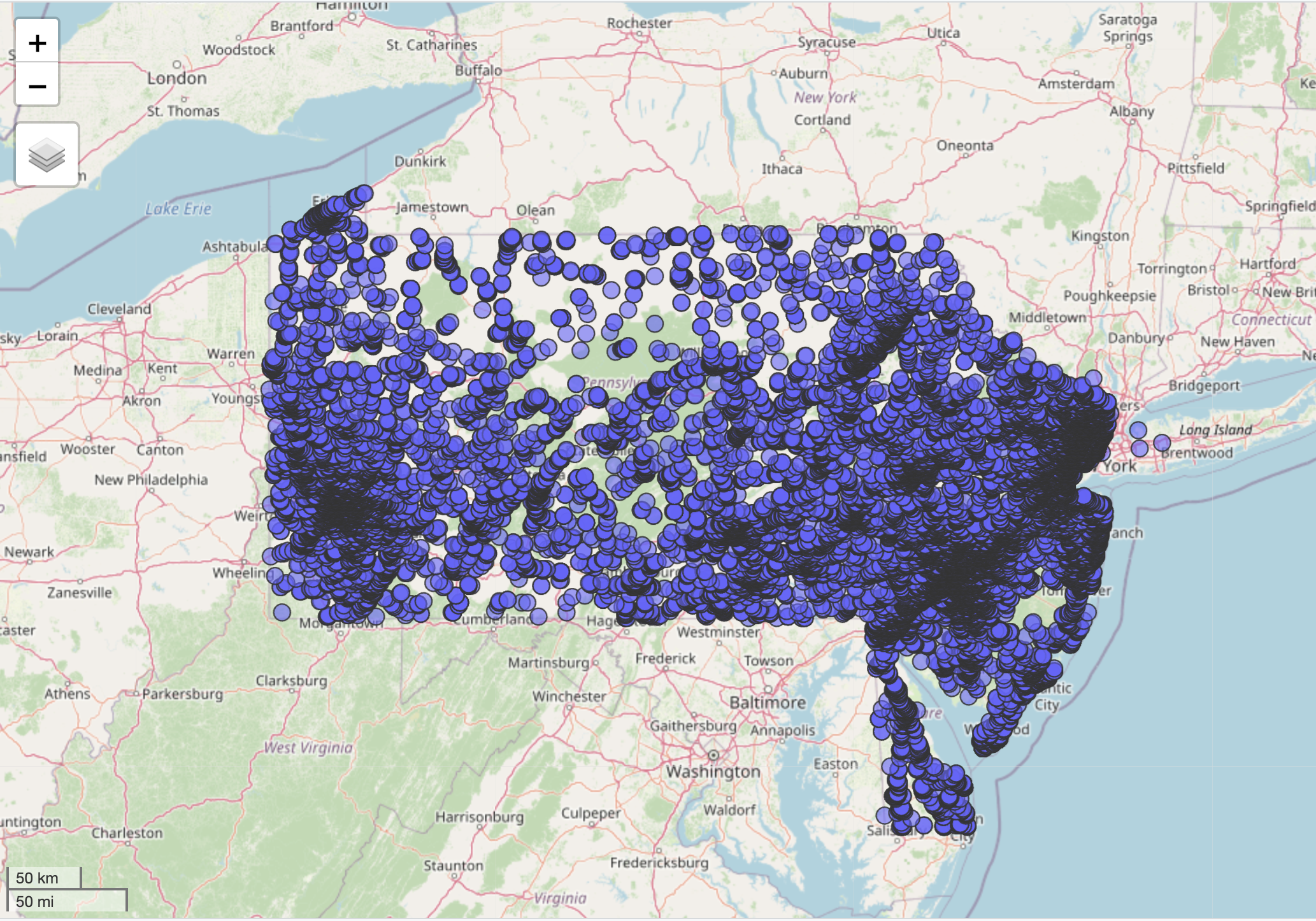
A map of all of the tobacco retailers in our database, across Pennsylvania, Delaware, and New Jersey
fMRI Data
🧠 Neuroimaging Data
fMRI data collected during tobacco cue reactivity tasks to measure neural responses to smoking and retail environment cues.
🧠 Neuroimaging Data Acquisition
Functional magnetic resonance imaging (fMRI) data were collected during tobacco cue reactivity tasks to measure neural responses to smoking and retail environment stimuli.
Scanner Specifications
BOLD Sequence Parameters
Spatial Resolution
Acquisition Details
📋 Technical Notes
- Anatomical Scans: T1-weighted and T2-weighted anatomical scans were collected at the start and end of the task
- Distortion Correction: Phase encoding direction optimized for standard distortion correction protocols
- Data Format: Images acquired and stored following BIDS (Brain Imaging Data Structure) standards
- Quality Control: All acquisitions included automated shimming and motion monitoring
🎯 fMRI Task Design
Imaging Components:
- Task-based fMRI during image rating
- T1-weighted structural scans
- T2-weighted structural scans
- Fieldmap scans for distortion correction